Source Touch Control PMMA Lens for Optical, Medical, and Electronic uses
Find 30 verified listings for Touch Control PMMA Lens suitable for optical, medical, and electronic applications. Buyers can compare specifications including transmittance, coatings, and customization options from suppliers in Dongguan and Taiwan.
Key considerations
Products List


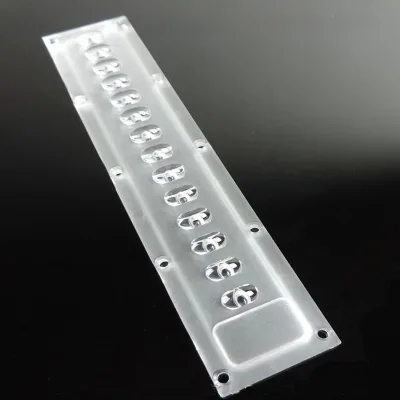


High-Power COB Optical Lens with 36-Degree Light Diffuser; (PMMA) Reflector Cover
$0.23 - $0.52
MOQ: 2000 pieces


Comprehensive Sourcing Guide
Strategic Sourcing Guide for Touch Control PMMA Lens Procurement
Understanding the Technical Landscape of PMMA Lenses
When sourcing touch control PMMA lenses, buyers must first distinguish between the material properties and the functional requirements of the specific application. Polymethyl methacrylate (PMMA), often referred to as acrylic, is a transparent thermoplastic widely utilized in optical applications due to its high light transmittance and excellent weatherability. The supplied product data indicates that PMMA is a primary material category for these components, often appearing alongside optical glass in broader lens catalogs. The core technical advantage of PMMA lies in its ability to be molded into complex shapes, such as convex lenses, which are explicitly listed in the observed product attributes.
For touch control applications, the optical clarity is paramount. The data confirms that transmittance for these lenses can exceed 95%, a critical metric for ensuring that touch sensors or capacitive layers function without signal degradation caused by light scattering. The material is available in various color profiles, including clear, semi-clear, and opal colors, with custom-made options available to meet specific design aesthetics. The shape of the lens is not limited to simple geometries; the observed market includes laminated lenses and specific models designed for LED applications, suggesting that the form factor must align with the touch interface's optical path.
The manufacturing process for these lenses often involves plastic extrusion and co-extrusion, as noted in the supplier attributes. This method allows for the creation of uniform thickness and consistent optical properties across large batches. However, for high-precision touch control interfaces, the surface finish is equally critical. The data highlights surface finishes such as film lamination and anti-reflective coatings. These processes are essential for reducing glare and ensuring that the touch sensitivity remains consistent across the entire surface area. Buyers should verify that the specific PMMA lens they select includes these surface treatments, as raw PMMA may not offer sufficient optical performance for sensitive touch applications without them.
Compliance and Certification Verification
In the B2B procurement of optical components, compliance is not merely a formality but a prerequisite for market access and liability protection. The product data reveals a diverse landscape of certifications held by suppliers, including ISO, CE, and ISO RoHS. While these certifications are listed as attributes of various products, buyers must understand that certification status is product-specific and not a universal guarantee for every item in a supplier's catalog. A supplier may offer ISO-certified optical glass lenses while their PMMA touch control lenses are only CE certified, or vice versa.
The presence of ISO and CE certifications suggests adherence to international quality management systems and European safety standards, respectively. The ISO RoHS certification specifically indicates compliance with restrictions on hazardous substances, which is vital for electronic products that may be sold in regions with strict environmental regulations. When evaluating suppliers for touch control PMMA lenses, procurement teams must request specific test reports or certificates of conformity for the exact model number being purchased. The data mentions that standards can be "Customized" or "According to Customer's Request," which implies that a supplier might not hold a pre-existing certification for a specific custom design. In such cases, the buyer must verify if the supplier has the capability to undergo third-party testing to validate the product against the required standard before mass production begins.
Furthermore, the "Standard" attribute in the data is sometimes listed as "5*5" or "Customized," which may refer to specific industry benchmarks or internal quality protocols. Buyers should not assume that a "Customized" standard implies a lack of rigor; rather, it often means the product is tailored to a specific client's quality agreement. However, this necessitates a more rigorous review of the supplier's quality control documentation. The data also lists "Product Origin" locations such as Dongguan, Taiwan, and Shenzhen, which can influence the regulatory framework applicable to the goods. Sourcing from regions with established manufacturing ecosystems often correlates with higher consistency in meeting ISO and CE requirements, but this must be validated through direct inquiry rather than assumed based on geography alone.
Cost Drivers and Pricing Dynamics
The pricing structure for touch control PMMA lenses is influenced by a complex interplay of material costs, manufacturing complexity, and order volume. The observed price range in the market spans from 0.1 to 10 USD, indicating a significant variance based on the specific application and customization level. A lens priced at the lower end of this spectrum is likely a standard, off-the-shelf item with minimal processing, such as a basic convex lens with standard packaging. Conversely, items at the higher end likely incorporate specialized features like anti-reflective coatings, custom shapes, or complex lamination processes.
Material costs are a primary driver, with PMMA being a distinct category from optical glass. While the data lists both materials, the choice between them often dictates the price point. PMMA is generally more cost-effective for large-volume production due to its moldability, but the addition of coatings or custom colors can increase the unit cost. The "Customization" attribute is listed as "Available" and "Custom Made," which inherently introduces a cost premium. Custom molds, often highlighted as an advantage by suppliers with their own mold factories, require upfront tooling investments that are typically amortized over the order quantity.
Order volume, represented by the Minimum Order Quantity (MOQ) ranging from 1 to 5000 units, plays a decisive role in the final unit price. Suppliers with a production line and R&D capabilities, as noted in the data, are better positioned to offer competitive pricing for high-volume orders. However, for low-volume or prototype runs, the cost per unit will be significantly higher due to the setup costs of extrusion and molding processes. Buyers should also consider the "Packing" costs, which vary from plastic packaging to cartons or custom requests. Specialized packaging required for sensitive touch lenses can add to the overall landed cost. Additionally, transportation methods—ship, air, or land—will impact the total procurement cost, with air freight being the most expensive but fastest option.
Typical Applications and Functional Requirements
The versatility of PMMA lenses allows them to serve a wide array of applications, from consumer electronics to industrial and medical devices. The product data explicitly lists "Electronic Product" as a key application area, which aligns closely with the core keyword of touch control. In this context, the lens acts as the interface between the user and the device, requiring high optical clarity and durability. The "Usage" attribute also includes "Optical" and "Medical," suggesting that these lenses are suitable for diagnostic equipment where precision is critical.
For touch control interfaces, the lens must often function as a protective cover while maintaining the sensitivity of the underlying touch sensor. The data mentions "Street lens" and "Street light lens," which, while seemingly distinct, share the requirement for high durability and weather resistance. In an indoor electronic context, the "Modern" style and "Clear" color are preferred to ensure a sleek aesthetic. The "Feature" of being "Recyclable" is increasingly important for manufacturers aiming to meet sustainability goals, particularly in the consumer electronics sector.
The "Thickness" of the lens is another critical factor, listed in the data as "Customized." For touch control applications, the thickness must be optimized to balance structural integrity with optical performance. A lens that is too thick may introduce distortion, while one that is too thin may be prone to cracking. The "Coating" attributes, such as UV and Anti-Reflective Coating, are essential for applications exposed to varying light conditions. UV coating protects the lens from yellowing over time, while anti-reflective coatings ensure that the touch interface remains visible and responsive under bright lighting. Buyers should match these functional requirements to the specific environment where the product will be deployed, ensuring the selected lens meets the necessary performance criteria.
Supplier Evaluation and Manufacturing Capabilities
Selecting the right supplier for touch control PMMA lenses requires a deep dive into their manufacturing capabilities and R&D infrastructure. The data highlights that many suppliers possess "Our Own Mold Factory and Production Line," which is a significant advantage for ensuring quality control and lead time management. Suppliers with in-house mold capabilities can offer faster turnaround times for custom designs and have greater flexibility in adjusting production parameters. This is particularly important for touch control lenses, which often require precise tolerances to function correctly with capacitive or resistive touch sensors.
The "Customized support" attribute, listing OEM, OBM, and ODM options, indicates that suppliers are willing to collaborate on design and branding. However, buyers must verify the extent of this support. Does the supplier provide full design services, or do they simply manufacture to a provided blueprint? The "R&D" mention suggests that some suppliers have the technical expertise to optimize lens designs for specific touch control applications, such as improving light distribution or enhancing surface hardness.
Geographic location is another factor in supplier evaluation. The data lists origins in Dongguan, Shenzhen Baoan District, and Taiwan, all of which are major manufacturing hubs in China. These regions have established supply chains for optical components and plastics, which can facilitate easier communication and logistics. However, buyers should not rely solely on location; they must assess the supplier's specific quality management systems. The presence of ISO and CE certifications is a positive indicator, but the buyer should request evidence of these certifications for the specific product line being sourced. Additionally, the "Transportation" options provided by suppliers, including ship, air, and land, should be evaluated to ensure they align with the buyer's logistics strategy and delivery timelines.
Quality Control and Long-Term Procurement Considerations
Ensuring consistent quality in touch control PMMA lenses requires a robust quality control (QC) framework that extends beyond the initial inspection. The data mentions "Surface Finish" and "Coating" as critical process attributes, both of which must be rigorously tested. Buyers should implement incoming quality control checks that verify the transmittance levels, ensuring they meet the >95% threshold observed in the data. Any deviation in transmittance can indicate issues with the material purity or the coating process, which could compromise the touch sensor's performance.
Long-term procurement considerations also involve the stability of the supply chain. The "Pattern of Payment" listed includes T/T, Western Union, Paypal, and Money Gram, indicating that suppliers are flexible but buyers should establish clear payment terms to mitigate financial risk. For long-term contracts, buyers should negotiate volume discounts and secure supply agreements that guarantee consistent quality over time. The "Custom Made" and "ODM/Customize" attributes suggest that the product may evolve, so the supplier must have the capacity to scale production and adapt to design changes without compromising quality.
Finally, the "Feature" of being recyclable should be integrated into the procurement strategy. As environmental regulations tighten, suppliers who can provide data on the recyclability of their PMMA lenses will be better positioned to support their clients' sustainability initiatives. Buyers should also consider the "Package" options, ensuring that the packaging protects the lenses from damage during transit and storage. A comprehensive QC plan should include regular audits of the supplier's production line, verification of their certification status, and testing of sample batches to ensure that the touch control lenses continue to meet the required specifications over the lifecycle of the product.
FAQs
What certifications are available for touch control PMMA lenses?
Available certifications include ISO, CE, and ISO RoHS. These vary by specific product model, so buyers must verify the exact certificate for the lens they intend to purchase rather than assuming all items share the same compliance status.
Can I customize the shape and color of these lenses?
Yes, customization is available for shape, color, and specifications. Suppliers offer options like clear, semi-clear, or opal colors, and can produce laminated lenses or custom models according to specific customer requests and design requirements.
What is the typical transmittance rate for these optical lenses?
The transmittance rate typically exceeds 95 percent. This high clarity is essential for optical and touch control applications to ensure signal integrity and visual performance without significant light scattering or degradation across the lens surface.
Which manufacturing processes are used for these PMMA lenses?
Manufacturing often involves plastic extrusion and co-extrusion methods. These processes allow for uniform thickness and consistent optical properties, often combined with surface finishes like film lamination or anti-reflective coatings for enhanced performance.
What is the minimum order quantity for these optical components?
The minimum order quantity ranges from one to five thousand units. This wide range allows buyers to source small prototypes or large production batches, with unit pricing often decreasing as the order volume increases significantly.
Where are these touch control lenses typically manufactured?
Products originate from locations such as Dongguan, Shenzhen Baoan District, and Taiwan. These regions are established manufacturing hubs, but buyers should confirm the specific origin for each order to understand applicable logistics and regulatory frameworks.
How are these lenses packaged for transportation?
Packaging options include cartons, plastic packaging, or polybags. Suppliers may also provide custom packaging according to customer requests, ensuring the lenses are protected during transit via ship, air, or land depending on the buyer's logistics needs.